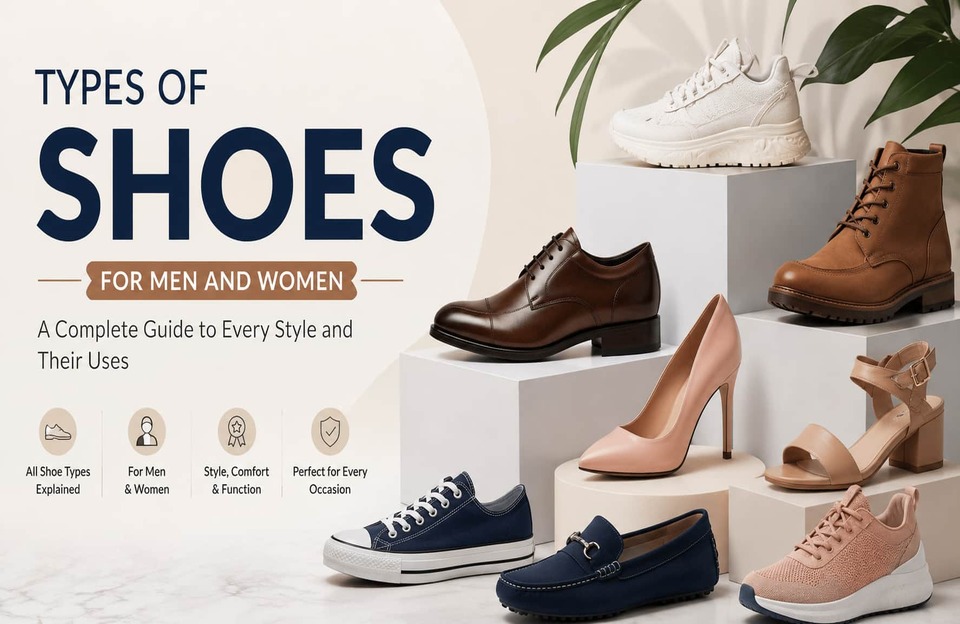
As someone who has spent years exploring footwear trends, I can tell you that knowing the different types of shoes is more important than most people think. Shoes are not just about style—they impact comfort, confidence, and even how you carry yourself. Each type has a story and a purpose. From casual sneakers to sturdy boots or elegant heels, there is a perfect pair for every occasion.
In this guide, I’ll walk you through 30 popular types of shoes for men and women. You’ll learn about their design, history where relevant, best occasions, style tips, and materials. By the end, you’ll know exactly which shoes suit every outfit and event.
Understanding the different types of shoes is not just about knowing names or styles. It helps you choose the right pair for every occasion, stay comfortable throughout the day, and express your personal style with confidence. Some shoes are made for formal events, while others are perfect for casual outings or sports. By learning their features, materials, and ideal uses, you’ll be able to make smarter choices that suit both your wardrobe and lifestyle.
Why Knowing Different Types of Shoes Matters
Choosing the right shoes is more than just picking something that looks good. Different shoes are designed for specific purposes. Wearing the wrong type can affect comfort, posture, and even confidence. By understanding the types of shoes, you’ll know which pair fits the occasion, activity, and outfit perfectly.
For example, formal events often call for polished Oxfords or elegant heels, while casual outings work best with sneakers or loafers. Athletic shoes like running shoes or basketball shoes are engineered to support your feet during exercise and reduce the risk of injury. Knowing the purpose behind each shoe type helps you make informed choices that combine style, comfort, and practicality.
Additionally, understanding materials, designs, and features ensures durability and better care for your shoes. Shoes aren’t just fashion—they’re an investment. Choosing wisely saves money, keeps your feet healthy, and elevates your overall style.
Types of Shoes for Men (Casual, Formal & Athletic Footwear)
Men’s footwear has evolved far beyond basic functionality. Today, different types of shoes for men are designed for specific occasions, activities, and fashion preferences. From formal dress shoes like Oxfords to casual styles such as sneakers and loafers, each type offers a unique balance of comfort, style, and purpose.
Understanding these options helps you choose the right pair for work, casual outings, sports, or special events. Below are some of the most popular shoe types every man should know.
Popular Types of Shoes for Men
Let’s explore some of the most popular types of shoes for men, from casual everyday styles to classic formal footwear.
- Sneakers
- Running Shoes
- Loafers
- Oxfords
- Derby Shoes
- Brogues
- Monk Strap Shoes
- Boots
- Chelsea Boots
- Chukka Boots
- Boat Shoes
- Sandals
- Flip-Flops
- Espadrilles
- Slip-On Shoes
Sneakers
Sneakers are casual athletic shoes designed for comfort, everyday wear, and light sports activities.
Sneakers are one of the most popular types of shoes in modern fashion. They usually have a flexible rubber sole, soft cushioning, and a lightweight upper made from materials like canvas, mesh, or leather. Their sporty design makes them both practical and stylish.
The modern sneaker evolved from rubber-soled plimsolls in the late 19th century. Over time, they became widely used in sports and later turned into everyday casual footwear.
Today, sneakers are worn for walking, travel, casual outings, and light workouts. They pair easily with jeans, shorts, joggers, and other relaxed everyday outfits like t-shirts and hoodies. Thanks to their cushioning, breathable materials, and supportive soles, sneakers provide excellent comfort for long hours of wear.
Running Shoes
Running shoes are athletic footwear designed to provide cushioning, support, and stability during running or jogging.
Running shoes are built for performance and comfort. They usually feature lightweight materials, breathable mesh uppers, and flexible rubber soles. Most running shoes also include extra cushioning to absorb impact while moving.
Modern running shoes became popular in the 20th century as sports brands began designing footwear specifically for athletes. Today, they are widely used not only for running but also for gym workouts, walking, and daily activities, walking, and everyday casual wear.
Running shoes pair well with athletic outfits such as joggers, shorts, t-shirts, and gym wear. Their cushioned midsoles, breathable fabrics, and supportive design help reduce strain on the feet, making them ideal for long-distance running and active lifestyles.
Loafers
Loafers are slip-on shoes known for their laceless design and effortless blend of casual and formal style.
Unlike many traditional dress shoes, loafers are designed for convenience and easy wear. They usually feature a low heel, a sleek upper made from leather or suede, and a comfortable slip-on construction. This design makes them easy to wear while still looking refined.
Loafers first gained popularity in the early 20th century, inspired by casual footwear worn in Norway. Over time, they became a staple in men’s fashion, especially in business-casual and smart-casual wardrobes.
Today, loafers are commonly worn at offices, social gatherings, and semi-formal events. They pair well with chinos, tailored trousers, and even dark jeans for a smart-casual look. Thanks to their soft materials and flexible construction, loafers offer comfort for long hours while maintaining a polished appearance.
Oxford Shoes (include history)
Oxford shoes are classic formal dress shoes recognized for their closed lacing system and sleek, elegant design.
A defining feature of Oxfords is their clean and structured appearance. The laces are stitched under the vamp, which creates a smooth front and a more refined look compared to many other dress shoes. They are usually crafted from polished leather and often come in classic colors such as black, brown, or burgundy.
Oxford shoes originated in the 19th century and became popular among students at Oxford University in England. Over time, they evolved into one of the most iconic styles of formal footwear and are now considered a staple in men’s professional and ceremonial dress.
Today, Oxfords are commonly worn for business meetings, formal events, weddings, and professional settings. They pair best with suits, tailored trousers, and formal attire such as tuxedos or business suits. Because of their structured construction and high-quality leather materials, Oxford shoes offer durability while maintaining a timeless and sophisticated look.
Derby Shoes
Derby shoes are formal lace-up shoes known for their open lacing system, which gives them a slightly more relaxed fit and added comfort than Oxfords.
At first glance, Derby shoes may look similar to Oxford shoes, but their construction is different. The eyelets for the laces are stitched on top of the vamp rather than underneath it. This open-lacing design creates a wider opening, making Derby shoes easier to wear and more comfortable for people with broader feet.
Derby shoes became popular in Europe during the 19th century and gradually gained recognition as a versatile dress shoe. Unlike the strictly formal Oxford style, Derbies strike a balance between elegance and everyday practicality.
Today, Derby shoes are commonly worn in business settings, formal gatherings, and smart-casual occasions. They pair well with suits, dress trousers, and even well-fitted chinos for a smart-casual look. Because of their slightly roomier structure and durable leather materials, Derby shoes offer both comfort and sophistication for long hours of wear.
Brogues
Brogues are dress shoes recognized for their decorative perforations and detailed patterns on the leather surface.
What makes brogues unique is the small punched holes, known as broguing, which appear along the edges and seams of the shoe. These decorative details give brogues a distinctive look while still maintaining a formal appearance. They are usually made from leather and often come in styles such as full brogues (wingtips), semi-brogues, and quarter brogues.
Brogues originated in Scotland and Ireland, where farmers traditionally wore them in wet countryside areas. The small perforations were originally designed to help water drain from the shoes when walking through damp fields. Over time, this practical feature became a stylish design element in modern footwear.
Today, brogues are widely worn for business, formal occasions, and smart-casual outfits. They pair well with suits, dress trousers, tweed jackets for a classic smart-casual look, and tailored outfits like blazers and formal suits. Thanks to their durable leather construction and structured design, brogues offer both elegance and long-lasting comfort.
Monk Strap Shoes
Monk strap shoes are dress shoes that use a buckle and strap instead of traditional laces.
This unique fastening system gives monk strap shoes a clean and sophisticated appearance. Most designs feature either a single buckle or a double buckle across the upper part of the shoe. They are usually crafted from smooth leather, which enhances their polished and elegant look.
The design is believed to have been inspired by footwear worn by European monks centuries ago. Over time, this functional strap system evolved into a stylish alternative to lace-up dress shoes.
Today, monk strap shoes are often worn in business meetings, formal events, and office settings. They pair well with tailored suits, dress trousers, and smart-casual outfits like chinos and blazers. Because they combine the elegance of formal shoes with the convenience of a buckle closure, monk straps offer both style and practicality for modern wardrobes.
Boots
Boots are durable shoes that cover the foot and extend above the ankle for extra protection and support.
Unlike regular shoes, boots are designed to handle tougher conditions. They usually feature thicker soles, stronger stitching, and sturdy materials such as leather or suede. Their higher structure helps protect the feet and ankles from cold weather, rough surfaces, and outdoor environments.
Boots have been worn for centuries by soldiers, workers, and travelers who needed reliable footwear for demanding conditions. Over time, boots evolved from purely practical gear into an important part of modern fashion.
Today, boots are worn for many purposes, including outdoor activities, winter wear, casual outings, and everyday use. They pair well with jeans, rugged trousers, leather jackets, and winter layered outfits. Because of their strong construction and supportive design, boots provide durability, comfort, and a bold fashion statement.
Chelsea Boots
Chelsea boots are sleek ankle boots known for their elastic sides and easy slip-on design.
These boots usually feature a smooth upper, a rounded toe, and stretchy elastic panels on both sides. This design allows the boots to be worn without laces while still fitting securely around the foot and ankle.
Chelsea boots became popular in the Victorian era. They were originally designed for Queen Victoria, who wanted comfortable riding footwear that was easy to put on and remove. Over time, the style gained worldwide recognition and became a staple in men’s fashion.
Today, Chelsea boots are worn in both casual outings, smart-casual events, and everyday wear. They pair well with slim-fit jeans, tailored trousers, and tailored coats. Their clean design and supportive structure make them comfortable for daily wear while still maintaining a polished and modern appearance.
Chukka Boots
Chukka boots are ankle-length boots with a simple design and usually two or three pairs of eyelets for laces.
These boots are known for their minimal and clean appearance. They typically feature soft leather or suede uppers and thin rubber or crepe soles. The design is lightweight compared to many other boot styles, which makes them comfortable for everyday wear.
Chukka boots gained popularity in the mid-20th century and are often associated with the classic desert boot style. Their relaxed structure made them a favorite choice for people who wanted a balance between casual comfort and smart appearance.
Today, chukka boots are commonly worn in casual outings, smart-casual events, and everyday wear. They pair well with jeans, chinos, and semi-formal trousers with shirts or blazers. Because of their lightweight materials and flexible soles, chukka boots provide comfort while still offering a stylish and versatile look.
Boat Shoes
Image (boat-shoes-casual-slip-on)
alt=”casual boat shoes with non slip rubber sole for men”
caption: Boat shoes are casual slip-on footwear designed for comfort and grip on wet surfaces.
Boat shoes are casual slip-on shoes designed with non-slip soles and a relaxed, nautical style.
These shoes are easy to recognize by their low-cut design, soft leather or canvas upper, and rubber soles with special grip patterns. Many boat shoes also feature decorative laces around the sides, which add to their classic look.
Boat shoes were originally created for sailors who needed stable footwear on wet and slippery boat decks. The non-marking rubber soles were designed to provide grip without damaging the surface of the boat.
Today, boat shoes are worn mainly for casual outings, summer vacations, and beachside settings. They pair well with shorts, chinos, and lightweight outfits like polo shirts and linen shirts. Because of their soft materials and flexible construction, boat shoes offer comfort and breathability, making them ideal for warm weather and relaxed settings.
Sandals
Sandals are open footwear designed to keep the feet cool and comfortable in warm weather.
They usually have a flat sole with straps that hold the foot in place. These straps can be made from leather, fabric, or synthetic materials. The open design allows air to circulate, which makes sandals a popular choice for hot climates.
Sandals are one of the oldest types of footwear, with a history that dates back to ancient civilizations such as Egypt and Greece. They were originally made from natural materials and used for protection while keeping the feet ventilated.
Today, sandals are worn for casual outings, travel, beach trips, and everyday summer wear. They pair well with shorts, light trousers, and summer outfits like t-shirts, tank tops, and linen clothing. Because of their lightweight construction and breathable design, sandals provide comfort and ease, especially during hot weather.
Flip-Flops
Flip-flops are lightweight open sandals with a simple thong-style strap that sits between the toes.
They are easy to recognize because of their minimal design. Most flip-flops have a flat sole made from rubber or foam and a Y-shaped strap that holds the foot in place. This simple construction makes them quick to wear and remove.
Flip-flops have a long history and are believed to have originated in ancient civilizations such as Egypt and Japan, where similar thong-style sandals were commonly used. Over time, they evolved into one of the most popular casual footwear options worldwide.
Today, flip-flops are mainly worn for beach outings, poolside use, casual walks, and indoor wear. They pair well with shorts, swimwear, and relaxed summer outfits like t-shirts and beachwear. Because of their lightweight materials and open design, flip-flops provide comfort and breathability, especially in hot weather.
Espadrilles
Espadrilles are lightweight casual shoes known for their rope soles and breathable fabric uppers.
One of the most distinctive features of espadrilles is their sole, which is traditionally made from braided jute rope. The upper part is usually crafted from canvas or cotton, giving the shoes a soft and airy feel. This simple design makes them ideal for warm weather.
Espadrilles originated in Spain and have been worn for centuries, especially in Mediterranean regions. They were initially used by workers because of their comfort and natural materials, but over time they became a popular summer fashion choice.
Today, espadrilles are commonly worn for casual outings, summer vacations, beach trips, and resort wear. They pair well with shorts, linen trousers, and light summer outfits like linen shirts and cotton t-shirts. Thanks to their breathable materials and flexible construction, espadrilles provide comfort while maintaining a relaxed and stylish look.
Slip-On Shoes
Slip-on shoes are casual footwear designed without laces, making them easy to wear and remove.
These shoes feature a simple design with no fastening system. They usually have elastic panels or a flexible opening that allows the foot to slide in comfortably. Slip-ons are often made from canvas, leather, or synthetic materials, depending on the style.
Slip-on shoes became widely popular in the 20th century as people started looking for convenient and comfortable everyday footwear. Their practical design made them a favorite for casual and quick wear.
Today, slip-on shoes are commonly worn for daily activities, travel, casual outings, and quick errands. They pair well with jeans, shorts, and casual outfits like t-shirts and everyday wear. Because of their lightweight construction and easy fit, slip-ons provide comfort and convenience, especially for people who prefer hassle-free footwear.
Types of Shoes for Women (Casual, Formal & Fashion Footwear)
Women’s footwear offers a wide variety of styles designed for comfort, fashion, and different occasions. From elegant heels to relaxed flats and everyday sneakers, each type serves a unique purpose while enhancing overall style.
Understanding these types of shoes for women makes it easier to choose the right pair for work, casual outings, parties, or special events. In the following section, I’ll walk you through some of the most popular women’s shoe styles, explaining their design, ideal use, and how they fit into modern fashion.
Popular Types of Shoes for Women
Below are some of the most popular types of shoes for women, including casual, formal, and fashion footwear designed for different occasions.
- Sneakers
- Sandals
- High Heels
- Boots
- Ballet Flats
- Pumps
- Wedges
- Flip-Flops
- Loafers
- Ankle Boots
- Knee-High Boots
- Platform Shoes
- Mules
- Espadrilles
- Stilettos
Sneakers
They typically feature cushioned soles, breathable uppers, and lightweight construction. Many women’s sneakers also focus on stylish designs, colors, and patterns, making them suitable for both casual and trendy outfits.
Originally developed for sports and athletic activities, sneakers gradually became a key part of everyday fashion. Today, they are widely worn beyond fitness and are considered essential in modern wardrobes.
Women commonly wear sneakers for daily activities, travel, and casual outings. They pair well with jeans, dresses, skirts, and semi-casual outfits like tops and layered looks. Thanks to their supportive structure and flexible materials, sneakers provide comfort for long hours while maintaining a stylish and relaxed look.
Sandals
Sandals are open footwear designed to keep the feet cool while offering a blend of comfort and casual style.
They usually feature a flat or slightly raised sole with straps that secure the foot. Women’s sandals come in many designs, from simple everyday styles to more decorative and fashion-focused options, often made from leather, fabric, or synthetic materials.
Sandals have been worn for centuries and are among the oldest forms of footwear. Over time, they evolved from purely functional designs into stylish options suited for modern fashion.
Today, women commonly wear sandals for casual outings, summer travel, beach trips, and everyday wear. They pair well with dresses, skirts, shorts, and light outfits like summer dresses and tops. Because of their open structure and breathable materials, sandals provide comfort in warm weather while maintaining a relaxed and stylish appearance.
High Heels
High heels are elevated footwear designed to raise the heel of the foot, adding height and a more refined posture.
Unlike flat shoes, high heels shift body weight forward, which creates a more upright stance and a distinctive walking style. They come in many forms, including pumps, stilettos, and wedges, each offering a different level of height and support. Most high heels are made from leather, suede, or synthetic materials with a structured sole.
High heels have been part of fashion for centuries and were once worn by both men and women in European courts. Over time, they became strongly associated with women’s fashion and evolved into a symbol of elegance, confidence, and formal style.
Today, high heels are commonly worn for formal events, office wear, parties, and special occasions. They pair well with dresses, skirts, and tailored outfits like formal suits or structured dresses. While they enhance appearance and style, comfort can vary depending on heel height and design, so choosing the right fit and support is important for long wear.
Boots (Women)
Boots are sturdy footwear that cover the foot and extend above the ankle, offering both protection and a strong fashion statement.
They usually feature a closed design with a higher shaft, which can vary from ankle-length to knee-high styles. Women’s boots are often made from leather, suede, or synthetic materials, with designs ranging from sleek and fitted to more rugged and relaxed.
Boots have a long history and were originally worn for protection in outdoor and working environments. Over time, they became an essential part of women’s fashion, especially during colder seasons.
Today, women commonly wear boots for winter wear, casual outings, travel, and everyday fashion. They pair well with jeans, dresses, skirts, and layered outfits like coats, jackets, and winter dresses. Because of their supportive structure and durable materials, boots provide warmth, comfort, and a bold, versatile style.
Ballet Flats
Ballet flats are lightweight flat shoes inspired by the design of ballet slippers, known for their simple and elegant look.
These shoes typically have a thin sole, a rounded toe, and a low-cut upper that gently covers the front of the foot. They are usually made from soft materials like leather, suede, or fabric, which gives them a flexible and comfortable feel.
Ballet flats gained popularity in the mid-20th century, influenced by classical ballet footwear. Over time, they became a staple in everyday fashion because of their minimal design and ease of wear.
Today, ballet flats are commonly worn for daily activities, office wear, and casual outings. They pair well with dresses, skirts, and even jeans for a casual everyday looks. Because of their flat sole and soft construction, ballet flats offer comfort for regular use, although they may provide less arch support compared to structured shoes.
Pumps
Pumps are a type of high heel characterized by a closed-toe design, low-cut front, and usually no straps or fastenings.
Unlike many other high heels, pumps have a simple and clean silhouette. The front of the shoe is cut low, exposing the top of the foot, while the heel height can vary from low to high. Most pumps are made from leather, suede, or synthetic materials, giving them a polished and formal appearance.
Pumps became widely popular in the 20th century as a standard choice for women’s professional and formal wear. Their minimal design made them versatile and suitable for both office settings and elegant occasions.
Today, pumps are commonly worn at workplaces, business meetings, and formal events. They pair well with formal dresses, skirts, and tailored suits and office wear. Compared to other high heels, pumps often offer a more balanced combination of style and comfort, especially in mid or low heel variations.
Wedges
Wedges are a type of high heel where the sole is continuous from the front to the back, providing full-foot support.
Unlike stilettos or pumps, wedges do not have a separate heel. Instead, the heel and sole are connected in one solid piece, which distributes body weight more evenly. This design makes wedges more stable and easier to walk in compared to other high heels. They are often made from materials like cork, rubber, or wood, combined with leather or fabric uppers.
Wedges gained popularity in the 20th century as a comfortable alternative to traditional high heels. Their practical design made them suitable for both fashion and everyday wear.
Today, wedges are commonly worn for casual outings, summer events, and semi-formal occasions. They pair well with dresses, skirts, and relaxed outfits like summer dresses and casual wear. Because of their supportive structure and balanced height, wedges offer a good combination of style and comfort, especially for extended wear.
Flip-Flops
Flip-flops are lightweight open sandals with a simple thong-style strap that fits between the toes.
They usually have a flat sole made from rubber, foam, or soft synthetic materials. Women’s flip-flops often come in a variety of colors, prints, and decorative styles, making them both functional and visually appealing.
Flip-flops have been used since ancient times, with similar designs seen in regions like Egypt and Asia. Over time, they evolved into one of the most popular casual footwear options, especially for warm climates.
Today, women commonly wear flip-flops for beach outings, poolside use, casual walks, and indoor wear. They pair well with shorts, summer dresses, and lightweight outfits like summer tops and beachwear. Because of their minimal design and soft materials, flip-flops offer easy comfort and breathability, though they are best suited for short-term wear rather than long hours.
Loafers (Women)
Loafers are slip-on shoes designed for a clean, structured look with a balance of comfort and smart style.
They usually feature a low heel, a closed upper, and no laces, making them easy to wear. Women’s loafers often come in leather, suede, or synthetic materials, with modern designs that range from classic to fashion-forward styles.
Loafers originated as casual footwear in Europe and gradually became popular in both men’s and women’s fashion. Over time, they evolved into a versatile option suitable for semi-formal and everyday wear.
Women commonly wear loafers for office settings, casual outings, and smart-casual occasions. They pair well with trousers, skirts, dresses, and even jeans for a relaxed smart-casual look. Because of their structured design and soft materials, loafers provide comfort for long hours while maintaining a polished and effortless appearance.
Ankle Boots
Ankle boots are a type of boot that ends around the ankle, offering a compact and versatile style.
They feature a shorter shaft compared to other boots, making them lighter and easier to style. Women’s ankle boots come in various designs, including flat, heeled, and block-heel styles, and are often made from leather, suede, or synthetic materials.
Ankle boots gained popularity as a practical alternative to taller boots, providing the same protection with more flexibility and ease of movement. Over time, they became a staple in modern fashion due to their adaptability across seasons.
Today, ankle boots are commonly worn for casual outings, office wear, and everyday wear. They pair well with jeans, dresses, skirts, and layered outfits like jackets and coats. Because of their balanced structure and supportive design, ankle boots offer comfort while maintaining a stylish and modern look.
Knee-High Boots
Knee-high boots are tall boots that extend up to the knee, offering maximum coverage along with a bold and elegant style.
They feature a long shaft that covers most of the lower leg, which makes them stand out compared to ankle or mid-calf boots. Women’s knee-high boots are often made from leather, suede, or stretch materials, and may come in flat, heeled, or heeled block designs.
Knee-high boots gained popularity as both functional and fashionable footwear, especially in colder climates where added coverage provided warmth. Over time, they became a strong fashion statement in women’s wardrobes.
Today, knee-high boots are commonly worn during winter, for formal outings, and for everyday wear. They pair well with dresses, skirts, skinny jeans for a sleek look, and layered outfits like coats and long jackets. Because of their extended design and supportive structure, knee-high boots offer warmth, comfort, and a striking, confident appearance.
Platform Shoes
Platform shoes are footwear with a thick, raised sole that adds height while keeping the foot more level than traditional high heels.
Unlike stilettos or pumps, platform shoes lift both the front and the back of the foot. This design reduces the steep angle of the foot, making them more stable and often more comfortable to walk in. Women’s platform shoes come in various styles, including sandals, sneakers, and heels, and are usually made from materials like rubber, wood, or foam with leather or fabric uppers.
Platform shoes became especially popular during the 1970s as part of bold fashion trends. Over time, they have remained a recurring style in modern fashion, known for their statement look and added height.
Today, platform shoes are worn for casual outings, parties, and fashion-forward events and outings. They pair well with dresses, wide-leg pants, and trendy outfits like co-ord sets and statement pieces. Because of their thick sole and balanced design, platform shoes offer height, stability, and comfort compared to many traditional high heels.
Mules
Mules are backless shoes that are easy to slip on, offering a blend of comfort and modern style.
They feature a closed or open front with no support at the back, which makes them quick to wear and remove. Women’s mules come in different variations, including flat, heeled, and even platform styles, and are often made from leather, suede, or fabric.
Mules have a long history and were worn in different cultures as both indoor and outdoor footwear. Over time, they evolved into a fashion-forward choice, especially in contemporary women’s wear.
Today, women commonly wear mules for casual outings, office wear, and semi-formal occasions. They pair well with dresses, trousers, skirts, and relaxed outfits like summer dresses and casual wear. Because of their open-back design and lightweight construction, mules provide convenience and comfort while maintaining a stylish and effortless look.
Espadrilles
Espadrilles are lightweight casual shoes known for their signature rope soles and breathable fabric design.
They usually feature a flexible jute rope sole with an upper made from canvas or cotton. Women’s espadrilles often come in stylish variations such as slip-ons, lace-up designs, and wedge styles, making them both comfortable and fashion-forward.
Espadrilles originated in Spain and have been worn for centuries, especially in Mediterranean regions. Over time, they evolved from simple work footwear into a popular summer fashion choice.
Today, women commonly wear espadrilles for vacations, casual outings, and summer events and warm-weather outings. They pair well with dresses, skirts, shorts, and linen outfits for a relaxed summer look. Because of their lightweight materials and airy construction, espadrilles provide comfort and breathability while maintaining a relaxed and stylish look.
Stilettos
Stilettos are a type of high heel defined by their very thin, long heel, often measuring several inches in height.
What sets stilettos apart is their slender heel, which creates a sharp and elegant silhouette. Unlike pumps, which can have different heel shapes, stilettos specifically focus on height and a narrow heel structure. They are usually made from materials like leather, satin, or synthetic fabrics to enhance their sleek appearance.
Stilettos became especially popular in the mid-20th century as fashion began to emphasize bold and glamorous styles. Over time, they evolved into one of the most iconic symbols of high-fashion footwear.
Today, stilettos are commonly worn for parties, formal events, and evening occasions. They pair well with dresses, gowns, and stylish outfits like cocktail dresses and statement evening wear. While they offer a striking and elegant look, they may require more balance and are generally less comfortable for long periods compared to lower heels.
How to Choose the Right Type of Shoes (Summary Section)
Whether you’re choosing footwear for men or women, the right type of shoes depends on key factors like occasion, material, comfort, and style. Here’s a quick guide to help you make the right choice.
1. Occasion Matters
Start by identifying where you’ll wear the shoes.
- Formal events & office: Go for structured styles like Oxfords, pumps, or loafers
- Casual outings: Sneakers, sandals, or slip-ons work best
- Sports & active use: Choose performance-focused shoes like running shoes
- Indoor or relaxed wear: Flip-flops or soft slip-ons are ideal
Wearing the right shoes for the right occasion improves both comfort and overall appearance.
2. Choose the Right Material
The material of your shoes affects durability, comfort, and breathability.
- Leather: Durable, premium, and suitable for formal wear
- Canvas: Lightweight and perfect for casual use
- Synthetic: Affordable and versatile for different styles
- Rubber: Flexible and ideal for sports or wet conditions
The right material ensures your shoes last longer and feel comfortable in different environments.
3. Focus on Comfort & Fit
No matter how stylish the shoes are, comfort should never be compromised.
- Look for proper arch support
- Ensure enough cushioning for long wear
- Choose the correct size and fit to avoid discomfort
Well-fitted shoes prevent foot pain and support daily movement.
4. Match with Your Style
Shoes should complement your outfit and overall look to create a balanced and stylish appearance. Choosing the right footwear helps enhance your overall style while keeping your look appropriate for the occasion.
- Pair formal shoes with suits and tailored outfits
- Match casual shoes with relaxed or everyday wear
- Follow current fashion trends while keeping personal style in mind
The right pairing brings balance to your outfit and ensures a well-coordinated and polished appearance.
Quick Takeaway
The best shoes are the ones that balance occasion, material, comfort, and style. When you consider all these factors together, you not only look better but also feel more comfortable throughout the day.
Tips for Taking Care of Your Shoes
Taking proper care of your shoes helps maintain their appearance, comfort, and durability. Regular maintenance also extends their lifespan and keeps them looking new for longer.
Cleaning Tips
Clean your shoes regularly based on the material.
Use a soft brush or cloth for dust removal, and avoid harsh chemicals that can damage the surface. Leather shoes should be cleaned with a damp cloth and conditioner, while canvas and sneakers can be gently washed when needed.
Proper Storage
Store shoes in a cool, dry place away from direct sunlight.
Avoid piling them together, as this can cause deformation. Using a shoe rack or individual boxes helps maintain their original shape and condition.
Using Shoe Trees or Protective Sprays
Shoe trees help maintain the shape of leather shoes and reduce creasing.
Protective sprays can also be used to add a layer of resistance against water, dust, and stains, especially for suede and fabric shoes.
Extending the Lifespan of Different Materials
Different materials require different care routines.
Leather needs conditioning, suede requires dry brushing, and synthetic materials should be wiped clean regularly. Proper care based on material type significantly increases durability.
Quick Summary
Regular cleaning, proper storage, and material-specific care can greatly extend the life of your shoes while keeping them comfortable and visually appealing.
H2: Tips for Taking Care of Your Shoes
- Cleaning tips
- Proper storage
- Using shoe trees or protective sprays
- Extending the lifespan of different materials
Frequently Asked Questions (FAQs)
Q. What are the most popular types of shoes for men and women?
A. Popular men’s shoes include sneakers, loafers, boots, and formal dress shoes, while women commonly wear sneakers, sandals, heels, boots, and ballet flats. The popularity of each style depends on fashion trends, comfort, and daily use.
Q. How do I choose the right shoes for different occasions?
A. The right shoes depend on the occasion, outfit, and comfort needs. Formal events usually require dress shoes or heels, while casual outings are better suited for sneakers, sandals, loafers, or flats.
Q. Which shoe materials are best for comfort and durability?
A. Leather is known for durability and a premium appearance, while canvas provides breathability and flexibility. Synthetic and rubber materials are commonly used for lightweight comfort and sports footwear.
Q. Are sneakers suitable for both fashion and comfort?
A. Yes, sneakers are one of the most versatile shoe styles for both men and women. They combine comfort, cushioning, and modern fashion, making them suitable for casual wear, travel, and daily activities.
Q. What shoes work best with formal outfits?
A. Formal outfits pair best with structured footwear such as Oxford shoes, Derby shoes, loafers, pumps, or elegant heels. The right formal shoes help create a polished and professional appearance.
Q. How can I make my shoes last longer?
A. Regular cleaning, proper storage, and using protective products like shoe trees or waterproof sprays can help maintain the shape, comfort, and durability of different shoe materials.
Q. What are the different types of shoes for women?
A. Popular types of women’s shoes include sneakers, sandals, heels, ballet flats, loafers, boots, wedges, mules, and espadrilles. Each style is designed for different occasions, comfort preferences, and fashion needs.
Q. What are the most popular shoe brands?
A. Some of the most popular shoe brands include Nike, Adidas, Puma, Skechers, Bata, and Woodland. These brands are known for different types of footwear, including sneakers, running shoes, formal shoes, sandals, and casual everyday wear. Many of them are popular for combining comfort, durability, and modern fashion trends.
Conclusion
Choosing the right shoes plays an important role in balancing comfort, style, and suitability for different occasions. From casual sneakers and sandals to formal Oxfords and heels, each type of footwear serves a specific purpose and enhances your overall look in its own way.
Exploring different types of shoes helps you build a versatile wardrobe that fits every situation—whether it’s work, travel, daily wear, or special events. The right pair not only improves your appearance but also ensures long-lasting comfort throughout the day.
Find the perfect shoes for your style and occasion today and upgrade your footwear collection with choices that match both your personality and lifestyle.
Loved this guide? Visit FolkBlogWorld for more informative blogs on fashion, lifestyle, trends, and everyday essentials.