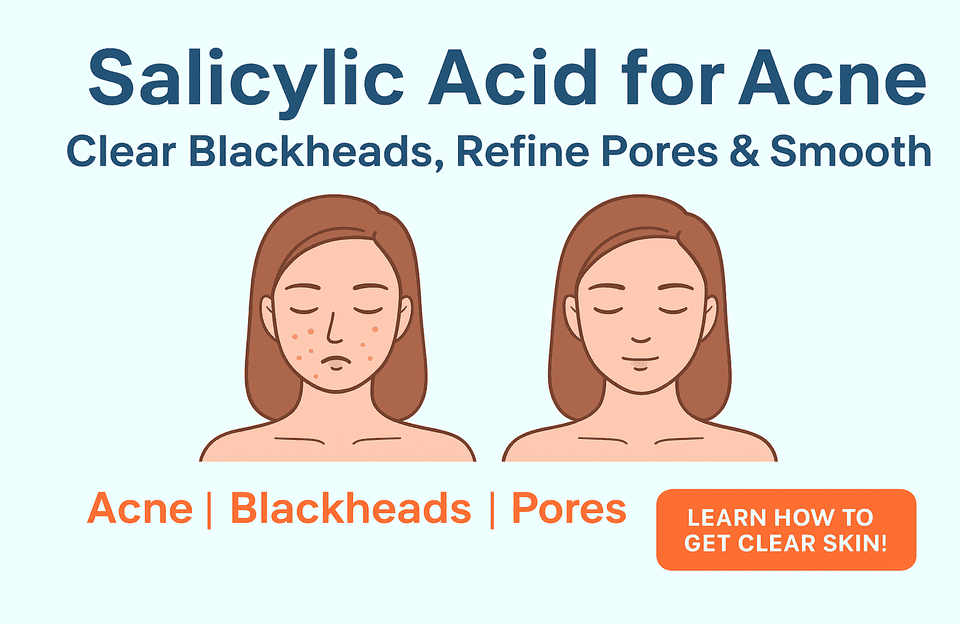
Struggling with acne, blackheads, or clogged pores? You’re not alone. These skin concerns affect millions of people worldwide and can be stubborn to treat. That’s where salicylic acid for acne comes in — one of the most trusted ingredients recommended by dermatologists for achieving clearer, healthier skin.
Unlike harsh scrubs or quick fixes, salicylic acid is a beta hydroxy acid (BHA) that penetrates deep into pores, dissolving oil, and gently exfoliating dead skin cells. The result? Fewer breakouts, smoother texture, and more refined-looking pores.
In this guide, we’ll cover everything you need to know about salicylic acid for acne — how it works, its benefits, the right way to use it, and what results to expect. Whether you’re dealing with occasional pimples or persistent acne, salicylic acid may be the ingredient your routine has been missing. By the end, you’ll know not just if salicylic acid works, but how to use it safely and effectively for the best results.
What is Salicylic Acid?
Salicylic acid is a beta hydroxy acid (BHA) that’s oil-soluble, meaning it can penetrate deep into the pores. Unlike alpha hydroxy acids (AHAs) that work mainly on the skin’s surface, salicylic acid goes beneath the surface to unclog pores, making it especially effective for treating acne, blackheads, and excess oil.
It’s derived from willow bark and has been used for centuries for its anti-inflammatory and skin-soothing properties. In modern skincare, it’s a gold-standard ingredient recommended by dermatologists for those struggling with acne-prone skin.
Key Properties of Salicylic Acid
- Exfoliating: Removes dead skin cells that cause clogged pores.
- Oil-Regulating: Dissolves sebum and reduces shine.
- Anti-Inflammatory: Calms redness and swelling associated with acne.
- Keratolytic: Softens and loosens buildup inside pores for clearer skin.
In simple terms, salicylic acid doesn’t just treat acne symptoms on the surface — it tackles the root cause by keeping pores clean and clear.
How Salicylic Acid Works on Skin
Salicylic acid works differently from many other skincare ingredients because of its oil-soluble nature, allowing it to reach deep inside pores where acne begins. Its multi-action mechanism makes it highly effective for treating acne, blackheads, and clogged pores.
Unclogs Pores at the Source
Salicylic acid penetrates pores to dissolve excess sebum, dirt, and dead skin cells. By removing this buildup, it prevents blackheads, whiteheads, and pimples from forming.
Gently Exfoliates the Skin
As a BHA, it promotes the natural shedding of dead skin cells on the surface. This not only improves skin texture and clarity but also prevents pores from becoming clogged again.
Reduces Inflammation
Its anti-inflammatory properties help calm redness, swelling, and irritation often linked to acne breakouts, making pimples less noticeable.
Controls Excess Oil
Regular use helps regulate sebum production, reducing shiny skin and creating a healthier environment that is less prone to breakouts.
Expert Tip
Dermatologists recommend incorporating salicylic acid gradually into your routine. Start with 2–3 times a week, then increase frequency as your skin builds tolerance. This minimizes the risk of dryness or irritation.
By addressing the root causes of acne — clogged pores, excess oil, and inflammation — salicylic acid not only treats existing breakouts but also helps prevent new ones from forming.
Benefits of Salicylic Acid for Acne
Salicylic acid is widely recognized by dermatologists and skincare experts as one of the most effective ingredients for acne-prone skin. Its multi-faceted approach tackles both current breakouts and prevents future ones.
Reduces Acne Breakouts
By penetrating pores and dissolving excess oil and debris, salicylic acid prevents pimples from forming. Its anti-inflammatory properties also calm redness and swelling associated with active acne.
Clears Blackheads and Whiteheads
Salicylic acid gently removes buildup inside pores, helping to eliminate stubborn blackheads and whiteheads, leaving skin smoother and clearer.
Refines Pore Appearance
Consistent use keeps pores unclogged, which can minimize their appearance and improve overall skin texture.
Controls Excess Oil Production
It helps regulate sebum, reducing greasy shine and lowering the likelihood of new breakouts forming.
Improves Skin Texture and Clarity
As a gentle exfoliant, salicylic acid removes dead skin cells, revealing smoother, brighter, and more even-toned skin.
Expert Insight
Studies have shown that over four to six weeks of consistent use, salicylic acid can significantly reduce acne lesions and improve skin clarity. Dermatologists often recommend it as a first-line treatment for mild to moderate acne.
In short, salicylic acid doesn’t just treat acne — it promotes healthier, balanced skin while tackling the root causes of breakouts.
Does Salicylic Acid Really Work for Acne & Blackheads?
The effectiveness of salicylic acid for acne is well-supported by both clinical research and dermatologist recommendations. It’s considered one of the most reliable over-the-counter treatments for acne, especially for blackheads, whiteheads, and clogged pores.
Why It Works
- Targets the Root Cause – Salicylic acid penetrates deep into pores, dissolving sebum and dead skin cells, preventing new breakouts from forming.
- Reduces Inflammation – Its anti-inflammatory properties help calm redness, swelling, and irritation caused by active acne.
- Gentle Exfoliation – Promotes natural skin cell turnover, reducing the buildup that leads to blocked pores and blackheads.
Clinical Evidence
- Studies have demonstrated that 2% salicylic acid formulations significantly reduce acne lesions in as little as 4–6 weeks when used consistently.
- It is recommended by dermatologists worldwide as a first-line treatment for mild to moderate acne, especially for oily and acne-prone skin.
Expert Tip
Results may vary depending on skin type, consistency of use, and combination with other skincare products. Pairing salicylic acid with hydrating ingredients like hyaluronic acid can prevent dryness and maximize benefits.
In short, salicylic acid doesn’t just temporarily treat breakouts — it addresses the underlying causes of acne and blackheads, making it a long-term solution for clearer skin.
How to Use Salicylic Acid in Your Skincare Routine
Incorporating salicylic acid for acne into your skincare routine doesn’t have to be complicated. The key is to use it consistently and correctly to maximize results while minimizing irritation.
Step 1: Cleansing
Start with a gentle salicylic acid cleanser if you have oily or acne-prone skin. Cleansing removes surface oil, dirt, and impurities, preparing your skin for the next steps.
Step 2: Toner or Serum
Leave-on products, such as a salicylic acid toner or serum, penetrate deeper into pores for more effective treatment. Apply after cleansing and before moisturizing.
Step 3: Spot Treatment
For stubborn pimples or blackheads, use a targeted salicylic acid spot treatment directly on affected areas.
Step 4: Moisturizer
Follow with a non-comedogenic moisturizer to maintain hydration and prevent over-drying, especially if using leave-on products.
Step 5: Sunscreen (Daytime)
Salicylic acid can increase sun sensitivity, so apply a broad-spectrum SPF 30 or higher every morning to protect your skin.
Expert Tips
- Start slowly: Use 2–3 times per week and gradually increase frequency as your skin adjusts.
- Avoid over-exfoliation: Don’t combine with strong AHAs or harsh scrubs on the same day.
- Monitor your skin: Reduce usage if irritation, redness, or peeling occurs.
By using salicylic acid correctly and consistently, you can effectively prevent breakouts, minimize blackheads, and maintain clearer, smoother skin.
How Much Salicylic Acid for Acne is Essential?
When it comes to salicylic acid, the right concentration matters more than the amount you apply. Using too much or too often won’t clear acne faster — it may only irritate your skin.
Recommended Concentrations
- 0.5% – 1%: Best for beginners, sensitive skin, or mild breakouts. Provides gentle exfoliation without overwhelming the skin.
- 2%: The most common over-the-counter strength recommended by dermatologists for acne and blackheads. Safe for most skin types with regular use.
- Above 2% (professional only): Found in chemical peels or clinical treatments performed under dermatologist supervision.
Frequency of Use
- Beginners: Start 2–3 times a week to allow the skin to adjust.
- Experienced users: Can build up to once daily if tolerated.
- Spot treatments: Apply only on affected areas for faster relief.
Expert Insight
According to dermatologists, initial side effects such as dryness, mild peeling, or redness are normal during the first 1–2 weeks. With consistent use, skin tolerance improves, and results usually become visible within 4–6 weeks. If irritation persists, reduce frequency or consult a skincare professional.
The sweet spot for most people is a 2% salicylic acid product, applied consistently — not excessively — to keep pores clear and acne under control.
Concentration, Formulations & Product Types
Salicylic acid comes in a variety of concentrations and formulations, making it easier to find the right product for your skin type and acne concerns. Understanding the differences helps you choose safely and effectively.
Concentration Levels
- 0.5% – 1%: Gentle for beginners or sensitive skin. Ideal for mild acne and occasional blackheads.
- 2%: The most widely recommended concentration for acne-prone skin. Dermatologists suggest this for consistent use to reduce breakouts and unclog pores.
- Above 2% (Professional Use Only): Found in chemical peels or dermatological treatments. Should not be used at home.
Common Formulations
- Cleansers: Mild exfoliation, removes surface oil and dirt. Best for daily or twice-daily use.
- Toners: Lightweight leave-on products that prep skin, refine pores, and provide gentle exfoliation.
- Serums: Penetrate deeper into pores for maximum effectiveness, ideal for acne and blackheads.
- Spot Treatments: High-concentration formulas for direct application on pimples or blackheads.
- Lotions & Creams: Often combined with soothing ingredients to prevent dryness and irritation.
Expert Recommendations
- For oily or acne-prone skin, serums or toners are most effective.
- For sensitive skin, start with lower concentrations in cleansers or creams.
- Always introduce new products gradually and perform a patch test.
Choosing the right concentration and formulation ensures that salicylic acid works effectively without causing unnecessary dryness or irritation.
Pairing Salicylic Acid with Other Ingredients
Salicylic acid is effective on its own, but combining it with the right ingredients can maximize results and minimize irritation. The goal is to enhance its acne-fighting properties while keeping the skin balanced and healthy.
Best Pairings
- Niacinamide: Reduces inflammation, controls oil, and strengthens the skin barrier. Perfect for acne-prone skin.
- Hyaluronic Acid: Provides hydration to counteract potential dryness from salicylic acid.
- Retinol (Use with Caution): Both promote cell turnover. Apply on alternate days to prevent irritation.
- Benzoyl Peroxide (Use with Caution): Effective for stubborn acne but should not be layered at the same time; alternate day usage is recommended.
Pairings to Avoid (Same Routine)
- Strong AHAs (Glycolic, Lactic Acid): Over-exfoliation can lead to irritation and compromised skin barrier.
- Vitamin C (Ascorbic Acid): Direct layering may reduce effectiveness and cause sensitivity.
Expert Tip
Think of salicylic acid as a pore-clearing powerhouse. Pair it with hydrating and soothing ingredients to maintain healthy skin and prevent over-drying or irritation.
Proper combinations can enhance acne control, reduce blackheads, and improve overall skin texture without compromising safety.
Choosing the Right Salicylic Acid Product
With so many salicylic acid products on the market, picking the right one depends on your skin type, concerns, and routine goals. Choosing carefully ensures effectiveness while minimizing side effects.
For Oily & Acne-Prone Skin
- 2% leave-on serums or toners penetrate deeply to unclog pores and reduce breakouts.
- Lightweight, oil-free, non-comedogenic formulas are ideal.
For Sensitive Skin
- Start with 0.5% – 1% cleansers or creams to minimize irritation.
- Look for formulations containing soothing ingredients like aloe vera, panthenol, or ceramides.
For Blackheads & Congested Pores
- Serums and spot treatments work best because they remain on the skin longer.
- Consider pairing with niacinamide for enhanced oil control.
For Daily Maintenance
- A salicylic acid cleanser or toner keeps pores clear and prevents future breakouts without over-drying the skin.
Expert Insight
Dermatologists advise starting with lower concentrations and simpler formulations, then gradually introducing stronger products as your skin builds tolerance. Always patch test before incorporating new products.
The right salicylic acid product balances efficacy and gentleness, giving you clearer, smoother skin without irritation.
Best Salicylic Acid Product Types
If you’re looking to add salicylic acid for acne to your skincare routine, several product types can fit different needs. Understanding their strengths helps you select the most effective option.
Cleansers
- Ideal for oily or acne-prone skin.
- Removes surface oil and impurities while providing mild exfoliation.
- Great for daily or twice-daily use, especially for beginners.
Toners
- Lightweight, leave-on formulations that refine pores and prep skin for serums and moisturizers.
- Helps maintain clear pores and control oil throughout the day.
Serums
- Penetrates deeper into pores for maximum acne-fighting effect.
- Ideal for targeted treatment of blackheads, whiteheads, and breakouts.
Spot Treatments
- High-concentration formulas for direct application on pimples or congested areas.
- Best for occasional breakouts or stubborn spots.
Lotions & Creams
- Combine salicylic acid with soothing or hydrating ingredients.
- Perfect for those who want exfoliation without excessive dryness.
Expert Tip
Select the product type that matches your skin’s tolerance and goals. Beginners may start with cleansers or toners, while more experienced users can use serums or spot treatments for maximum effect.
Whether your goal is daily maintenance, targeted treatment, or deep pore cleansing, there’s a salicylic acid product type to fit your routine.
Possible Side Effects and Patch Test
While salicylic acid for acne is widely regarded as safe and effective, some users may experience side effects if it’s overused or not introduced gradually. Knowing what to expect and performing a patch test ensures safe usage.
Possible Side Effects
- Dryness & Flaking: Common during the first 1–2 weeks as the skin adjusts.
- Redness & Irritation: May occur if combined with other strong actives or overused.
- Increased Sun Sensitivity: Skin may be more prone to sunburn; daily sunscreen is essential.
Who Should Be Careful?
- Individuals with very sensitive or dry skin.
- People allergic to aspirin (salicylic acid is in the same chemical family).
- Those already using multiple exfoliating or acne treatments.
How to Patch Test
- Apply a small amount of product on your inner forearm or behind the ear.
- Leave it for 24 hours and observe for redness, itching, or burning.
- If no reaction occurs, it is generally safe to use on the face.
Expert Tip
Start with 2–3 applications per week and gradually increase frequency. If irritation persists beyond two weeks, reduce usage or consult a dermatologist. Pair with a broad-spectrum SPF daily to protect the skin. With proper usage and caution, salicylic acid is a safe and effective solution for acne, blackheads, and clogged pores.
Common Myths About Salicylic Acid
There’s a lot of misinformation surrounding salicylic acid for acne. Clearing up these myths helps you use it safely and get the best results.
Myth 1: Salicylic Acid Causes Severe Dryness
Reality: While initial dryness is common, proper usage and pairing with moisturizers prevent excessive dryness. Most users adapt within 1–2 weeks.
Myth 2: It Works Instantly
Reality: Salicylic acid reduces acne and blackheads over time. Clinical studies show visible improvement usually within 4–6 weeks of consistent use.
Myth 3: Higher Concentrations Work Faster
Reality: More isn’t always better. Using higher concentrations can cause irritation without improving results. 2% is the recommended strength for most users.
Myth 4: Only for Oily Skin
Reality: While oily and acne-prone skin benefits most, formulations with lower concentrations or hydrating ingredients make it suitable for sensitive or combination skin.
Expert Tip
Always follow product instructions, introduce salicylic acid gradually, and combine it with hydrating or soothing ingredients to maximize results safely. Separating fact from fiction helps you use salicylic acid effectively and confidently, ensuring long-term skin health.
How Long Before You See Results?
One of the most common questions about salicylic acid for acne is how quickly it works. The answer depends on skin type, severity of acne, concentration, and consistency of use.
Typical Timeline
- First Week: Some users may notice slight dryness or flaking, which is normal as the skin adjusts.
- 2–4 Weeks: Early improvements in skin texture, oil control, and fewer small breakouts.
- 4–6 Weeks: Visible reduction in blackheads, whiteheads, and overall acne lesions.
- 8–12 Weeks: Significant improvement in skin clarity, smoother texture, and fewer breakouts with consistent use.
Expert Insight
Dermatologists emphasize that consistent daily or near-daily use is key. Overusing or expecting instant results may lead to irritation without faster outcomes.
Pro Tips for Faster Results
- Use 2% salicylic acid formulations as recommended for acne-prone skin.
- Pair with hydrating and soothing ingredients to prevent dryness.
- Maintain a simple, consistent routine; avoid layering too many actives at once.
Patience and consistency are essential — salicylic acid treats the root causes of acne, so visible results appear gradually over several weeks.
Quick Routine Examples
For those new to salicylic acid for acne, starting with a simple, beginner-friendly routine ensures effective results without irritation.
Morning Routine
- Cleanser: Use a gentle salicylic acid cleanser (0.5%–2%).
- Toner (Optional): Apply a light salicylic acid toner to control oil.
- Moisturizer: Use a non-comedogenic, hydrating moisturizer.
- Sunscreen: Apply broad-spectrum SPF 30+ daily to protect sensitive skin.
Evening Routine
- Cleanser: Use the same gentle salicylic acid cleanser.
- Serum or Spot Treatment: Apply a leave-on 2% salicylic acid serum or targeted spot treatment on affected areas.
- Moisturizer: Seal in hydration with a lightweight, non-comedogenic moisturizer.
Tips for Beginners
- Start 2–3 times per week to see how your skin tolerates salicylic acid.
- Gradually increase frequency as your skin adjusts.
- Avoid combining with strong AHAs or retinol on the same day to prevent over-exfoliation.
Expert Insight
Dermatologists often recommend starting slow and observing skin response. Over time, this routine can be increased to daily use for long-term acne management.
A simple, consistent routine is more effective than frequent, heavy-handed application. Salicylic acid works best when used gradually and strategically.
Clinical Evidence & Research
The effectiveness of salicylic acid for acne is supported by numerous clinical studies and dermatologist recommendations, making it one of the most trusted ingredients for acne-prone skin.
Key Research Findings
- A 2003 study in the Journal of Clinical and Aesthetic Dermatology found that 2% salicylic acid cleansers significantly reduced acne lesions and blackheads over a 6-week period.
- Research shows that salicylic acid penetrates pores and exfoliates within, making it effective for comedonal acne (blackheads and whiteheads).
- Comparative studies indicate that salicylic acid is less irritating than benzoyl peroxide while still maintaining strong acne-fighting benefits.
Dermatologist Recommendations
- Widely recommended as a first-line over-the-counter treatment for mild to moderate acne.
- Often advised for combination routines with moisturizers or soothing ingredients to minimize dryness and irritation.
Expert Insight
Consistent, properly dosed use of salicylic acid not only clears existing acne but also prevents new breakouts by keeping pores clear and reducing inflammation. Clinical evidence confirms that salicylic acid is safe, effective, and well-tolerated, making it a cornerstone of acne treatment routines worldwide.
Before & After: What to Expect
Understanding what to expect when using salicylic acid for acne helps set realistic goals and reduces frustration. Results take time and consistency.
Before Starting Salicylic Acid
- Skin may have clogged pores, blackheads, whiteheads, and occasional breakouts.
- Oiliness and uneven texture are common in acne-prone skin.
During the First Weeks
- Mild dryness, flaking, or slight redness may occur as skin adjusts.
- Early improvements in skin texture and oil control may be noticeable.
After 4–6 Weeks
- Reduction in blackheads, whiteheads, and acne lesions.
- Pores appear less congested, and skin texture becomes smoother.
After 8–12 Weeks
- Significant improvement in overall skin clarity and fewer breakouts.
- Skin looks healthier, more balanced, and better prepared to maintain long-term acne control.
Expert Tip
- Combine salicylic acid use with hydrating products and sunscreen to maximize results.
- Maintain a consistent routine; skipping days or overusing products can slow progress or cause irritation.
With patience and consistent use, salicylic acid can transform acne-prone skin, making it clearer, smoother, and healthier over time.
FAQs on Salicylic Acid for Acne
Here are the most common questions about salicylic acid for acne, answered by skincare experts and supported by research.
Q. Can I use salicylic acid every day?
A. Yes, but start slowly. Beginners should begin with 2–3 times per week and gradually increase to daily use if tolerated.
Q. Is salicylic acid safe for sensitive skin?
A. Yes, but choose lower concentrations (0.5%–1%) and pair with hydrating or soothing ingredients. Always perform a patch test first.
Q. Can I combine salicylic acid with other active ingredients?
A. Yes, with caution. Safe combinations include niacinamide and hyaluronic acid. Avoid layering strong AHAs, retinol, or benzoyl peroxide on the same day to prevent irritation.
Q. How long does it take to see results?
A. Visible improvements typically appear within 4–6 weeks, with significant results after 8–12 weeks of consistent use.
Q. Can salicylic acid remove scars?
A. It helps with post-acne hyperpigmentation and improves skin texture by promoting gentle exfoliation, but it does not erase deep scars.
Q. Do I need sunscreen while using salicylic acid?
A. Absolutely. Salicylic acid increases sun sensitivity, so applying broad-spectrum SPF 30+ daily is essential to protect your skin.
Expert Insight
For best results, incorporate salicylic acid into a balanced routine with cleansing, moisturizing, and sun protection, and be patient — acne improvements take time.
Conclusion
Salicylic acid for acne is a proven, dermatologist-recommended ingredient that tackles the root causes of breakouts — clogged pores, excess oil, and inflammation. Whether you’re struggling with blackheads, whiteheads, or oily skin, incorporating salicylic acid into a consistent skincare routine can lead to clearer, smoother, and healthier-looking skin.
Key Takeaways
- Start with the right concentration for your skin type (0.5%–2%).
- Introduce products gradually and monitor your skin’s response.
- Pair salicylic acid with hydrating and soothing ingredients to prevent dryness.
- Protect your skin daily with broad-spectrum SPF.
- Be patient — visible improvements typically appear within 4–6 weeks, with full results over 8–12 weeks.
Expert Recommendation
Consistency and proper usage are crucial. By following a simple, beginner-friendly routine and understanding the science behind salicylic acid, you can effectively reduce acne, refine pores, and maintain long-term skin health.
Salicylic acid isn’t just a temporary solution; it’s a long-term ally for acne-prone and oily skin, offering proven results when used correctly.
For more helpful guides and tips on a variety of topics, visit Folk Blog World.